

Picture this: Tuesday morning, sat in a sun-filled café in Medellin, sipping a flat white for under a dollar, fibre internet pumping out at 80 Mbps. Your monthly rent is less than a week’s worth of takeaway in your home country. That Tuesday is just another workday for millions of remote workers — and one of the most powerful choices they make is the city they spend it in.
But the highlight reel isn’t the whole story. People go to Bali for the hype, discover the villa Wi-Fi can’t hold a Zoom call and spend weeks apologising to clients. Others land in a cheap place on paper, but isolating in practice – no community, no co-working, no way to fill the social tank.
The right digital nomad destinations supports your work, expands your income, keeps you legal and gives you a life worth building. This guide will help you find it—with a five-factor framework, ten honest destination profiles, and a practical decision tool to match the right city to your situation.
What Makes a Great Digital Nomad Destination? The 5-Factor Framework
But before we dive into the cities, let’s lay out what you’re actually rating. Check every destination through these five lenses — then decide based on your income, timezone, and lifestyle.
1. Internet Reliability
It all starts here. To work comfortably from home, you need at least 25 Mbps download and 10 Mbps upload — enough to handle video calls, large file transfers and cloud tools all running at once. But speed alone won’t do.
What if the café router goes down? Is there a co-working space within a ten-minute walk? Will your mobile data see you through? The best digital nomad destination cities excel in all three. Check Speedtest’s city-level data and spend twenty minutes in the local nomad Facebook or Slack group before booking — first-hand reports beat every review site.
2. Cost of Living vs. Income Ratio
The question isn’t simply “is this city affordable?” It’s: Does your income stretch so much further here for a good life than it does back home? $3,000 per month is a tight budget in Zurich, a comfortable budget in Lisbon, and an abundant budget in Chiang Mai. Calculate by 4 categories – accommodation, food, transport, and co-working fees. A cheap-rent city can surprise you with expensive co-working or no cheap local food.
3. Visa and Residency Options
That is what gets most nomads, usually about six months in. Tourist visas (30-90 days) are fine for short rotations, but long-term stays require some planning. More and more countries are now offering dedicated digital nomad destination visas: legal permission to live and work remotely for one to two years, no border runs, no grey areas, and often a path towards longer residency.
4. Community and Co-Working Infrastructure
The biggest unmentioned challenge of the nomadic life is loneliness. The cities people return to are the ones that solve this, not just with fast internet, but with real human infrastructure. The best co-working spaces have weekly events, informal lunches, and industry meetups that allow you to build a network from scratch in just a few weeks. Expat communities and startup scenes provide a further layer of social texture.
5. Quality of Life
Healthcare access, personal safety, climate, walkability, and food culture aren’t on the short list, but decide if you’re happy by month three. A city that is cheap and well-connected but polluted, chaotic or medically unreliable will wear you down faster than you think.
The 10 Best Digital Nomad Destinations — Honest Profiles
Each profile is laid out the same way: what makes it great, real costs, honest cons and who it’s best for. Tags are assigned to income tiers to facilitate quick shortlisting.
1. Chiang Mai, Thailand — Budget Tier
Chiang Mai is the birthplace of digital nomadism — and more than a decade later, it remains the most comprehensive budget destination in the world for remote workers. A furnished one-bedroom in Nimman or Santitham will cost $350-$650 per month. Street food is under $2/meal. Co-working at places like MANA or Yellow starts at $80 a month, with fibre connections averaging 50-100 Mbps. The digital nomad destination community here is the most established in Southeast Asia – meetups, co-working events, and informal networks are part of the weekly rhythm.

The Long-Term Resident visa, launched in 2022, offers greater stability to eligible applicants. Many nomads still make do on tourist extensions, although that takes planning.
- Honest Cons: February to April smoky season damages air quality severely
- English is uncommon outside of tourist and co-working areas
- Some enjoy the slow pace, others feel it’s isolating
Best for: First-timers, budget-conscious nomads earning less than $2,500/month, and anyone who loves a warm, ready-made community from day one.
Monthly Budget Starting From: $800 – $1,000 / month
2. Mid Tier, Lisbon, Portugal
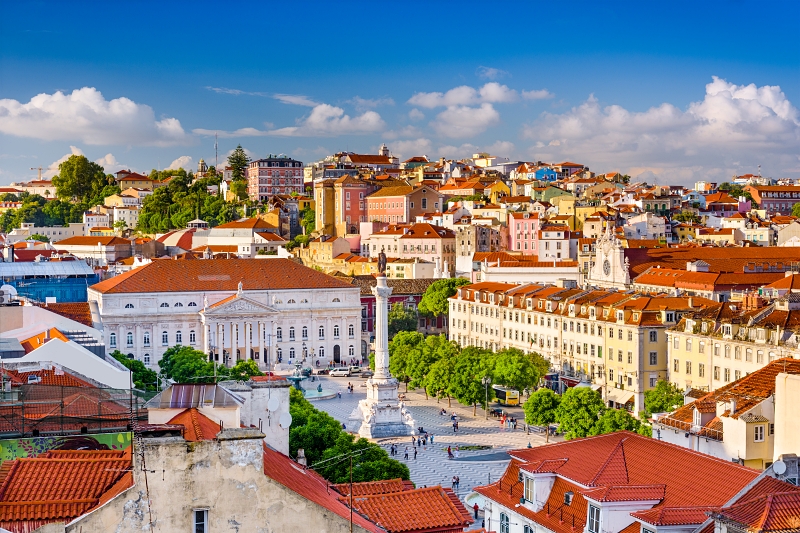
Lisbon seduces slowly, with its cobbles, tram bells, light off the Tagus at dusk, pastéis de nata for 90 cents from the café downstairs. It’s a European capital that still hasn’t fully caught up with its own desirability, and for now, that’s a gift—a central flat rents for €1,000 to €1,600 a month.
The D8 digital nomad visa in Portugal requires proof of an income of around €3,040 per month and allows you to stay legally for up to two years, with the possibility of extending your stay. Porto, two hours north, has the same quality of life at 20 to 30% lower cost. English is spoken all over. The startup scene is real. The sun shines more than 300 days a year.
- Honest cons: Rents have soared – the affordability advantage has shrunk
- D8 visa applications are slow and heavy on paperwork — start early
- More and more parts of central Lisbon are saturated with tourists
Best for: Clients in the EU timezone, those seeking legal certainty for residency, and earners earning $3,000+/month.
Monthly Budget Starting From: $1,600 – $2,000 / month
3. Medellín, Colombia – Budget/Mid Tier
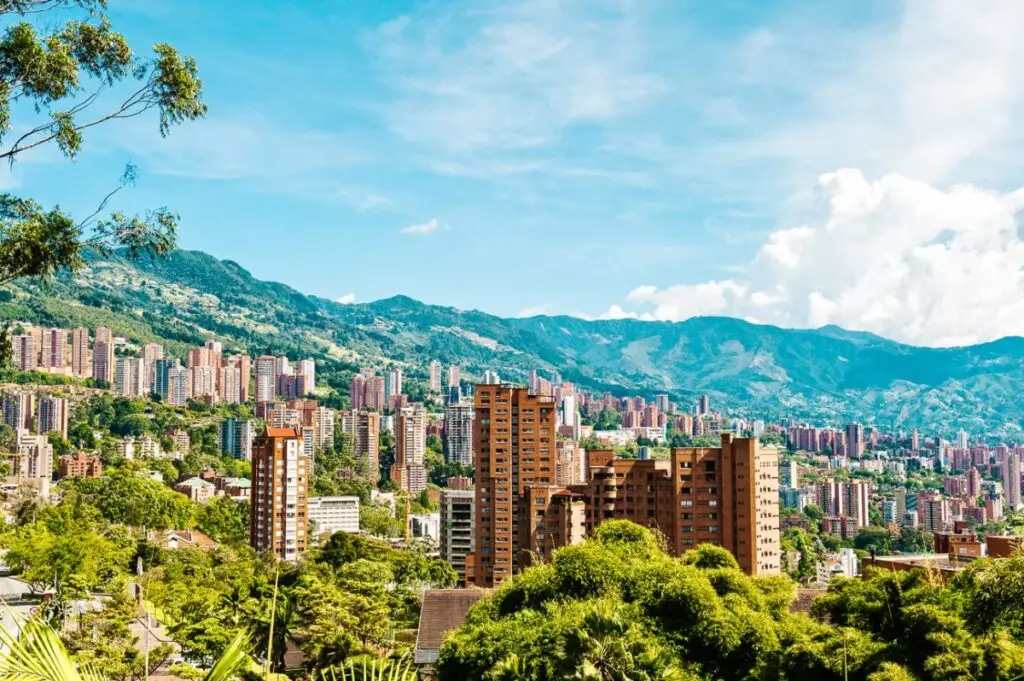
Medellín is 1,495 metres above sea level, which explains the almost permanent 22°C temperature all year round – la ciudad de la eterna primavera. The change from the troubled past of the city to one of the most liveable capitals of Latin America is real and visible. El Poblado apartments go for $600 to $1,000/month. Laureles, right across the river, offers a similar quality for a bit less money and a more local feel. Colombia’s digital nomad destination visa allows for up to 2 years of legal stay, and the co-working scene is expanding rapidly.
- Honest cons: Need to be safety-conscious outside the main expat corridors
- The El Poblado expat bubble can feel insular – try to venture beyond it
- Internet quality varies greatly from building to building and neighbourhood to neighbourhood
Best for: People living in the Americas timezone, earning $2,500–$5,000 a month, and who love the urban lifestyle and want big-city culture at a fraction of the cost.
Monthly Budget Starting From: $1,200 – $1,500 / month
4. Tbilisi, Georgia — Budget Tier
Georgia is one of the most underrated places for nomads on earth. Most nationalities can stay for a full 365 days without a visa – no forms, no fees, no border runs. Just land and work.” A decent flat in Vera or Vake is $400-$700 per month. A cup of coffee at any of the city’s thriving third-wave cafés costs less than $2; a full traditional dinner costs less than $10. The city itself is architecturally stunning, with a food and wine culture rivalling that of anywhere in Europe. The co-working scene has exploded since 2022 and continues to grow.
- Honest cons: UTC+4 adds real friction to calls with Western European and American clients
- Infrastructure is rougher and less predictable than in, say, Lisbon or Bangkok.
- The nomad community is younger and not as established as classic hubs
Best for: Budget-minded, adventurous nomads who want to get way ahead of the curve.
Monthly Budget Starting From: $800 – $1,000 / month
5. Mexico City, Mexico — Mid Level
Mexico City is a sensory assault – sixteen million people, a food scene that really stacks up globally, and creative energy that pulses through every neighbourhood. Roma Norte and Condesa are the nomad heartlands: walkable, co-working dense and full of restaurants that are simultaneously world-class and affordable. A decently located flat will cost you between $900 and $1,500 a month. The internet in these neighbourhoods is fast and reliable, and the existing digital nomad destination community is one of the largest and most active in the world. Being aligned with North American clients is a big practical plus, given time zones.

- Honest cons: Altitude of 2,240 metres strikes some newcomers in the first week
- Air quality is a genuine issue in the dry season (Nov – May)
- Getting around Roma/Condesa can be a bit of an ordeal due to traffic
Best for: People who work in the US and Canada time zones, people who enjoy food and culture, and people who earn $3,000+/month.
Monthly Budget Starting From: $1,500 – $1,800 / month
6. Bali, Indonesia – Mid Tier
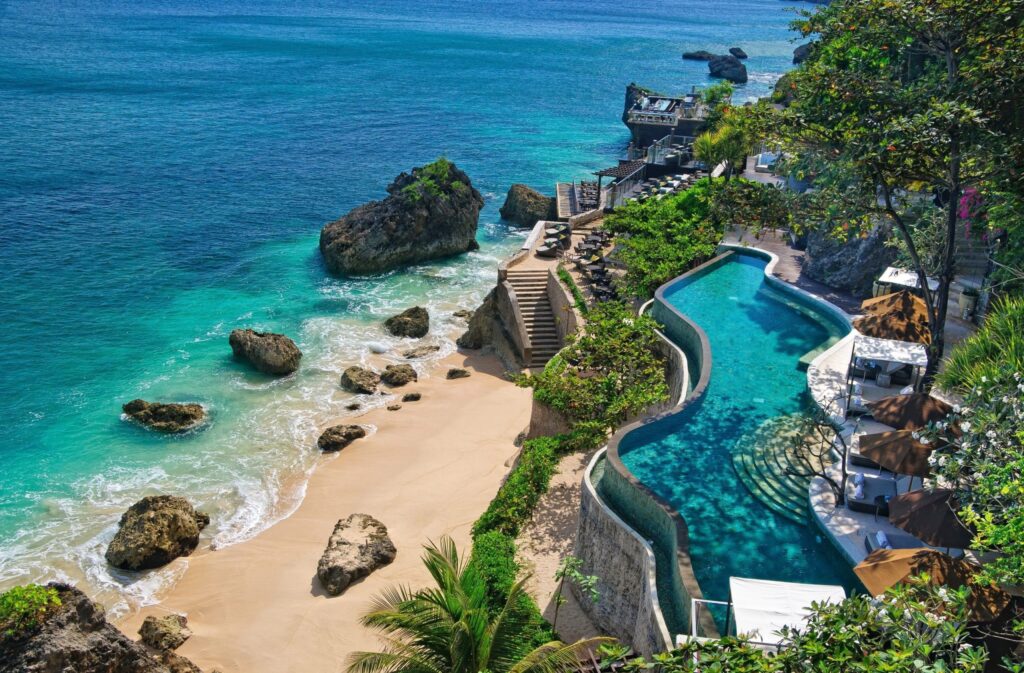
Bali is the most photographed digital nomad destination on earth — its biggest asset and greatest liability. The island divides into two nomad camps: Canggu — surf culture, beach clubs and a dense co-working scene; and Ubud — quieter, inland and more meditative. Co-working spaces are always 50 Mbps reliable; private villa connections are hit-or-miss. Expenses have shot up. A Canggu villa that was $600 a month in 2019 is now $1,200 to $1,800. The social scene, however, is unrivalled globally for events, workshops and community.
- Honest cons: Technically, working on a tourist visa is not legally permitted under Indonesian law
- Traffic in Canggu becomes pretty bad during peak season
- The cost advantage that was associated with early Bali nomadism has declined substantially
Best for: Lifestyle-first nomads and community seekers earning $3,000+/month.
Monthly Budget Starting From: $1,500 – $2,000 / month
7. Ho Chi Minh City, Vietnam — Budget Tier
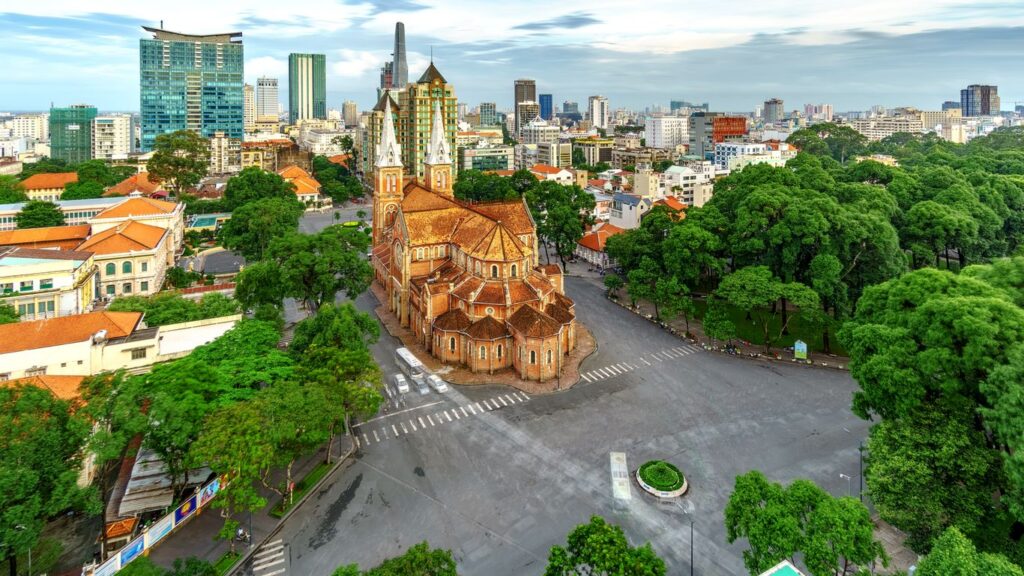
Ho Chi Minh City — still referred to as Saigon by just about everyone who lives there — is the Southeast Asian destination people discover second and immediately wish they’d discovered first. The streets are alive with motorbikes, street carts and the smell of pho on every corner. Internet speeds are consistently faster than in Thailand and Indonesia. Vietnam has invested heavily in broadband infrastructure, and you can see it. A nice flat in District 2 or District 7 can be rented for $400-$700 per month. A sit-down meal rarely costs more than $3. Reliable co-working spaces are Toong and Up Co-Working. They are well-priced, too.
- Honest cons: Heat and humidity from March through October are intense and relentless
- Planning and careful management are required for longer stays in Vietnam’s 90-day e-visa system.
- Public transport is limited– daily life needs a motorbike or heavy reliance on Grab.
Best for: Budget nomads, high-energy city lovers and those looking for fast internet and extraordinary food for less than $2,000/month.
Monthly Budget Starting From: $1,000 – $1,200 / month
8. Barcelona, Spain — Mid-Premium Tier
Barcelona doesn’t even have to try. The morning light on Gaudí’s Sagrada Familia, the medieval tangle of the Gothic Quarter, the Mediterranean stretching down to the south—this is a city that makes everyday life feel like a movie. Spain’s digital nomad destination visa, launched in 2023, enables non-EU remote workers to live in the country for up to 5 years legally. The co-working scene in Barcelona is great, especially around the tech-focused neighbourhood of Poblenou. A one-bedroom flat in a good neighbourhood costs €1,200 to €2,000 a month – more than Lisbon, but the cultural and lifestyle return is significant.

- Honest cons: crowds of tourists in the centre, especially in summer, affect the quality of life daily
- One of the most expensive places to live on this list — a premium destination with a premium income requirement
- The Nomad Visa application process is complicated, and it is usually worthwhile to get professional legal help.
Best for: Design and creative professionals, clients in the European timezone and anyone earning $4,000+/month.
Monthly Budget Starting From: $2,800 – $3,500 / month
9. Dubai, UAE — Premium Tier
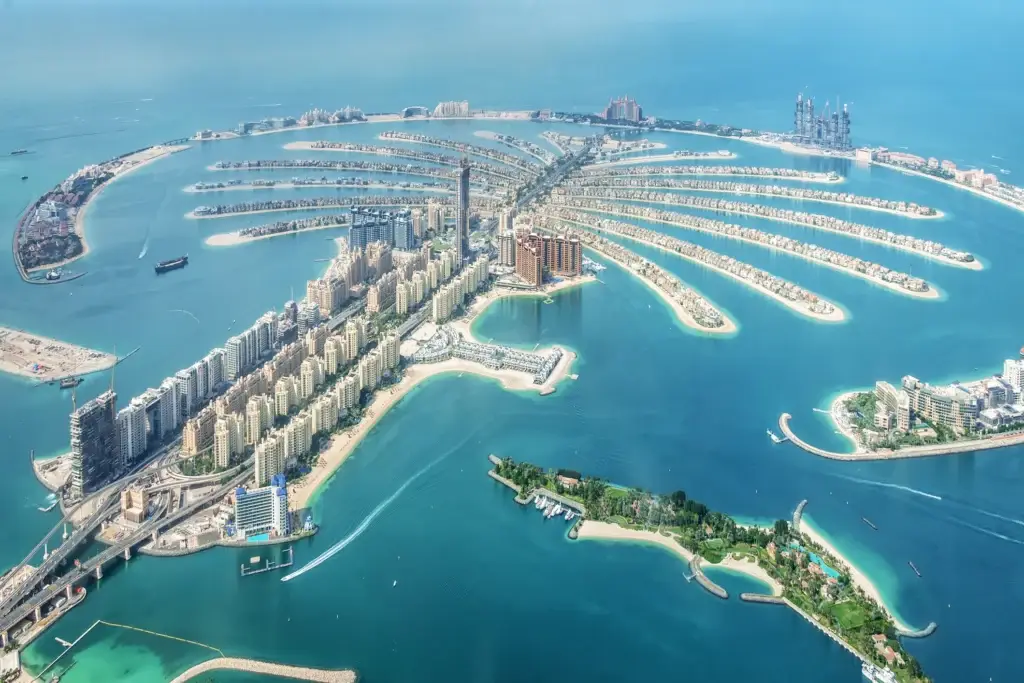
Dubai is not a city you go to stretch a limited income. It’s a city you come to when tax efficiency and world-class infrastructure matter most.” The UAE does not levy personal income tax – for higher earners, the financial shift can dwarf any savings available in a budget destination. The infrastructure is perfect: high-speed internet, reliable power, excellent co-working spaces, and security comparable to Singapore. A decent one-bedroom in DIFC or Downtown goes for $2,000 to $3,500 a month. The high cost of living reflects the overall premium positioning.
- Honest cons: Not a budget destination – judge it purely on income optimisation and infrastructure
- Cultural and social restrictions require genuine adjustment and respect
- The city can feel transactional compared to organic nomad communities elsewhere
Best for: Senior earners ($8,000+/month), tax efficiency, nomads with clients in the Middle East or Asia.
Monthly Budget Starting From: $4,000 – $5,000 / month
10. Cape Town, South Africa – Mid Tier
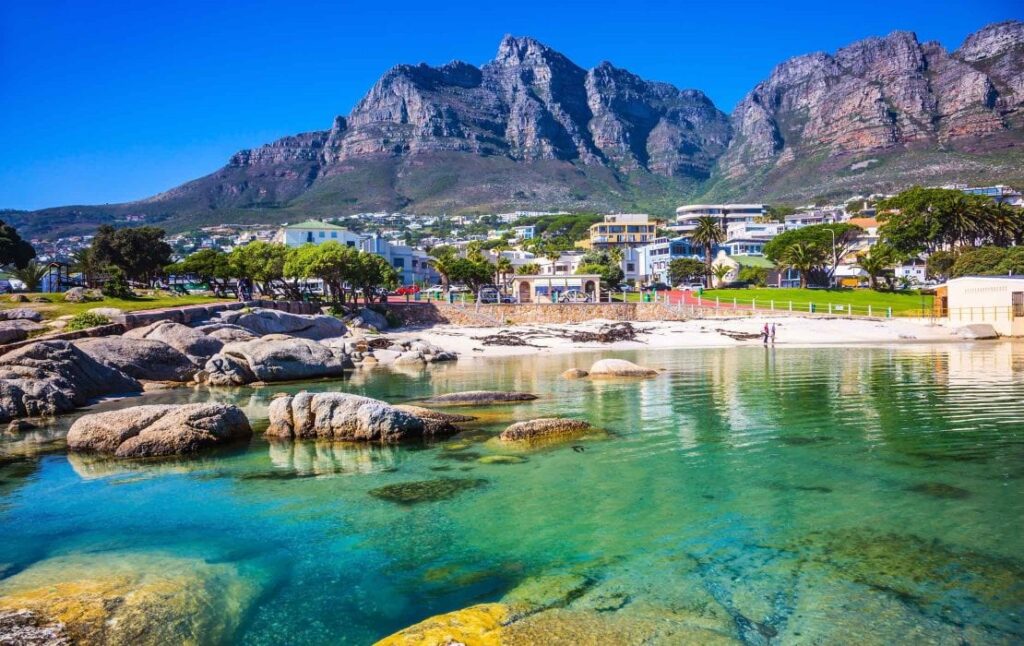
There are pretty cities, and then there is Cape Town—a place where beauty is almost unfair. Table Mountain looming over the CBD, the Atlantic coastline sweeping south, the winelands an hour away in Franschhoek and Stellenbosch. The real-world scenario matches: UTC+2 is a good time zone for European clients, with an emerging startup scene and a cost of living that offers a high quality of life for a fraction of similar European costs. A good flat in the Atlantic Seaboard or City Bowl goes for $800 to $1,400 a month.
- Honest cons: Load-shedding (scheduled power outages) is still an operational challenge – check backup at any co-working space or apartment before committing
- Personal safety requires meaningful awareness outside well-serviced areas
- The divide between wealthy enclaves and poorer neighbourhoods is stark and ubiquitous
Best for: European timezone workers, outdoor and nature lovers, and those making $3,000+/month who want exceptional scenery and a functioning professional ecosystem.
Monthly Budget Starting From: $1,500 – $2,000 / month
Digital Nomad Destination Visas — What They Are and Which Countries Have Them
A digital nomad destination visa allows you to legally live and work remotely in a country for a certain period of time, usually from one to two years. It’s meaningfully different from a tourist visa, which technically forbids working in most jurisdictions, even if enforcement is inconsistent. For nomads seeking legal certainty, a local bank account and a way to longer residency, a dedicated visa changes the whole equation.
The most practical options available as of 2025:
- Portugal D8 — up to 2 years, requires ~€3,040/month provable income, strong path to EU residency
- Colombia – Up to 2 years, fairly streamlined, great for Americas-based remote workers
- Georgia – 365 days visa-free entry for most nationalities; arrive, no application, no fee
- Spain – up to 5 years, started 2023, requires income verification and background checks
- Croatia — up to 1 year, a good choice for a search for an Adriatic lifestyle outside the Schengen zone
- Indonesia (Bali) — digital nomad destination visa options available, but requirements have changed; check current status before booking
One structural surprise for nomads heading to Europe is the 90-day rule in the Schengen Zone. Most non-EU passport holders are allowed to spend only 90 cumulative days across all Schengen countries in any 180-day period. Portugal and Croatia’s specific digital nomad destination visas circumvent this entirely – an important practical benefit for those looking to stay in Europe for longer periods.
Budgeting by Income Tier — What Each Level Unlocks
Match your income honestly to the right shortlist and then book. Here’s the breakdown of the numbers across the three main tiers.
Under $2,500/month:
Southeast Asia and the Caucasus are your best bets. In Chiang Mai, $2,500 a month will afford you a furnished flat, daily co-working, three meals a day and weekend trips around the area — with money to spare. Tbilisi has similar value and arguably better food & wine culture. Ho Chi Minh City and Medellin are both good options for this tier, especially if you get a little outside the main expat bubble to avoid the premium prices. Accommodation hacks to know: negotiate 10-20% off long-term rents, consider co-living spaces that bundle desk and accommodation, or try out house-sitting platforms to cut accommodation costs completely.
$2,500–$5,000 a month
This range opens up Lisbon, Mexico City, Bali and the comfortable tier of Medellín. Living in a well-located flat, working from quality co-working spaces, eating well every day, and still saving at $3,500 a month in Lisbon. In Mexico City, the same budget gets you a big flat in Roma Norte and access to some of the best restaurants in the world at neighbourhood prices. At this income level, a co-working membership ($150-$300 per month) almost always beats café-hopping — the reliable internet, dedicated desk, and social infrastructure make the cost easy to justify.
$5,000+/month
The calculation changes. You’re not optimising for cost anymore, you’re optimising for quality of life and legal stability. Barcelona, Dubai and Cape Town all get involved. Tax efficiency (Dubai), EU legal residency (Barcelona, Lisbon), and the European client timezone (Cape Town) are all meaningful variables that can have a greater impact on your long-term financial picture than day-to-day cost savings.
How to Choose the Right Destination for You
Every destination guide has one fundamental flaw: it makes the reader want what the writer describes. The best digital nomad destination is very personal, and the question to ask isn’t ‘what city is best?— It’s ‘which city is best for me, right now, given how I work and how I want to live?’
Step 1 — Lock Your Timezone Constraint First
First of all, map your clients or employer, and find out where they are sitting in the world. The real friction occurs when, for example, 80% of your work happens during US East Coast hours, and Southeast Asia is in a different timezone. Latin America keeps you in order. European customers? Keep it UTC to UTC+3. This one step halves the number of destinations immediately.
Step 2 — Match Your Income Tier To A Destination Shortlist
Be honest about how much you earn each month and the lifestyle you want. $2,500/month in Lisbon gets you a very different quality of life than the same budget in Chiang Mai, and neither is better than the other. What matters is the match.
Step 3 — Know Your Work Style
Tbilisi. Ubud. Hanoi. Quiet, sustained focus. Social energy and networking are Medellín, Mexico City or Canggu. Creative stimulation? Head for Lisbon, Barcelona or Cape Town. Most people don’t realise how much a city’s vibe influences their output until they arrive there.
Apply The Test Trip Rule
Try out your new city by living and working there for two to three weeks before signing a lease. Try out three co-working spaces. Check out the neighbourhoods you’d like to live in. Chat with nomads who have been there for more than a month. This single step will protect you from the most expensive and demoralising mistakes.
For research: Nomad List for aggregated data, Teleport for quality-of-life comparisons, and local Facebook or Slack nomad groups for unfiltered, up-to-date ground-truth accounts. Someone present now, and posting is more valuable than any review site.
FAQ — The Questions People Actually Search For
What Is The Best Digital Nomad Destination In 2025?
There is no single answer, but Medellin and Lisbon are the most consistent for good reason. Medellín wins on cost, climate, and America’s time zone. Lisbon wins on European lifestyle, legal visa options and value for mid-to-high earners. The right answer depends on your income, time zone and lifestyle priorities.
What Country Offers The Best Digital Nomad Desitination Visa?
The D8 visa for Portugal is, for many, the gold standard – two years of legal residency, a path to longer-term stays and EU citizenship, and total freedom to work remotely. For those who don’t meet the income threshold, Georgia’s 365-day visa-free entry is the most accessible in the world.
Conclusion:
There’s no one right answer for the best digital nomad destinations. It lives at the intersection of your income, your timezone, your work style, and the life you actually want to wake up to. Southeast Asia is the place to start for unmatched value and community. The visa situation in Europe has made it super easy to obtain legal long-term residency. Latin America is the smartest play if you’re a North American-time zone worker looking for urban richness at a fraction of home costs. And the new options – Tbilisi, Cape Town, Dubai – reward those who can think ahead of the pack.
Pick the digital nomad destination that scores three of your five framework factors, book a month, and go. You will learn more in four weeks on the ground than you will in four months of reading guidebooks like this one. The logistics are not as scary as they seem from a distance. The more difficult question, the one of what kind of life you want to build, is entirely up to you to answer.