How to Become a Digital Nomad (Complete Step-by-Step Guide for 2026)
Learn how to become a digital nomad in 2026 with this step-by-step guide covering skills, remote jobs, budgeting, visas, and real-world strategies in simple, easy language.
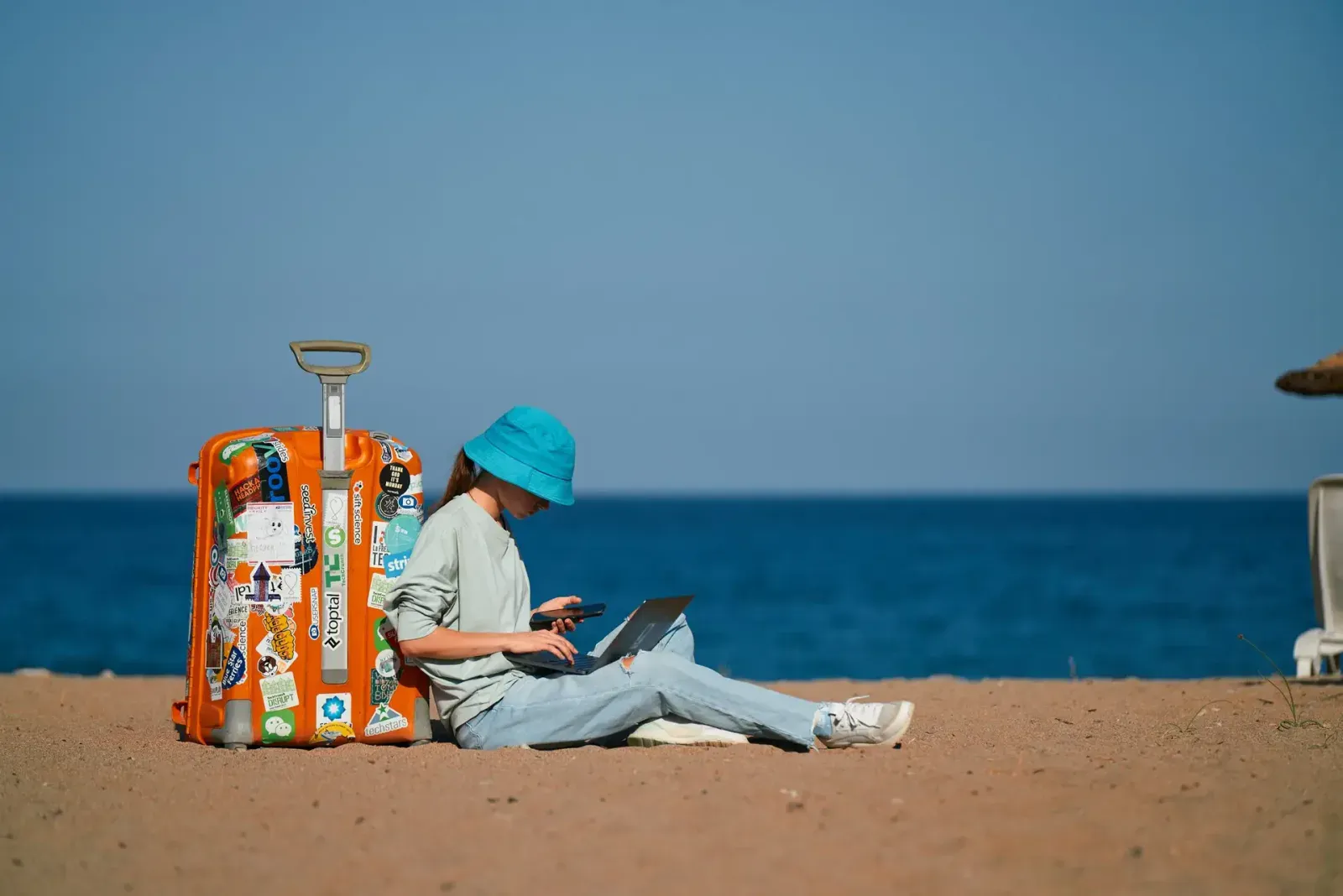
It generally begins with a little thought that hits you out of nowhere. Maybe on a long trip to work. Maybe when you're looking at a calendar full of meetings. Or maybe late at night when it's only your screen that's not quiet.
You notice someone is working from a café in another country. Or a quick clip of an open laptop by the ocean. And then, suddenly, it hits you: why does work have to be stuck in one place?
And that's where the concept of being a digital nomad starts.
However, there's a part that most people would overlook at first glance. This lifestyle isn't all about the travel, or the pretty places. It's based on one very basic idea: how to make money online in a stable manner.
After your income is online, your location is no longer stationary. That is when cities are not a must but an option.
Being a digital nomad does not mean escaping from work. It's about taking your work online and making your location flexible.
This guide will help you become a Digital Nomad in a practical and a step-by-step manner. No hype, no false promises. Clear actions, real skill paths, and simple decisions that actually get you to remote work and location freedom.
Let's begin with the ground level.
What a Digital Nomad Really Is
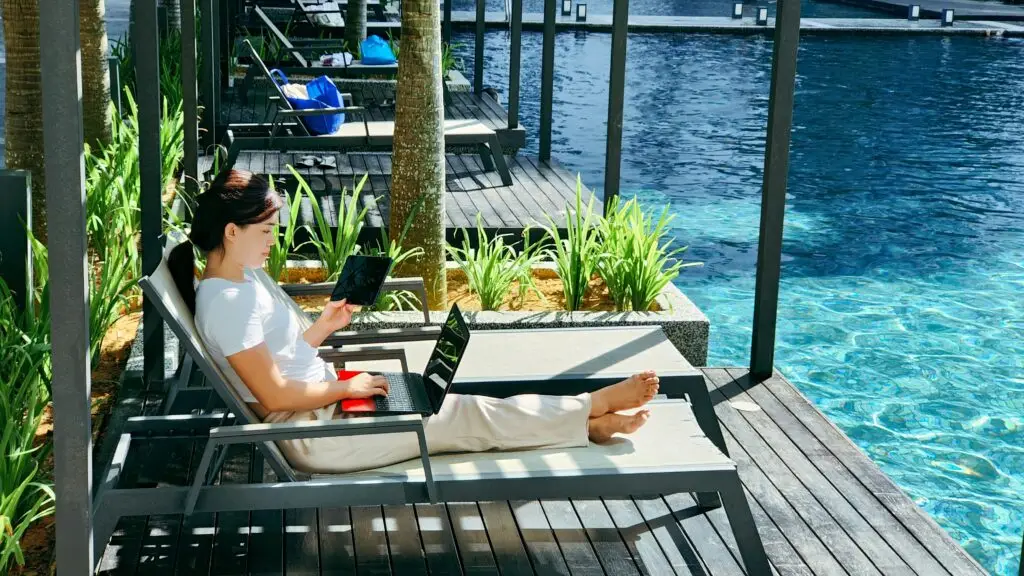
Digital nomads are people who work online and travel to different locations rather than having a primary or fix office or residence.
However, the actual meaning is a little more deeper than "travel and work."
Digital nomad is just someone who has taken the place restrictions out of their work. The work is still there. Deadlines still exist. Clients or managers are still there. All that's different is where they do it from.
One month it might be a little apartment in a quiet little town. Next month it might be a coworking space in another country. Or even an ordinary guest house equipped with a decent internet connection.
What the best part is that the income is not tied to a physical location.
Here are a few common ways to become a digital nomad:
- Some are employed doing full-time remote work for companies that enable them to work from anywhere.
- Some take projects from various clients online and work as freelancers.
- Some have small online companies such as content services, design work, or consulting.
Each of these routes will take you to the same destination: location freedom.
Many people think that digital nomads are always traveling. That's not accurate. There are lots of digital nomads that don't move from their spot for months. There are even those who remain in one country for a year or more. "Nomad" does not mean constant movers. It means you can go wherever you like, whenever you like.
This is the true core of how to become a digital nomad, finding a way to make money online that doesn't require you to be in one particular city, office, or country.
The Mindset Shift Most People Miss
The majority of people believe that having a digital nomad lifestyle is all about traveling, visas or choosing the right country to start with. But this is not where it begins. It begins in the head.
The first change that needs to happen is the one that starts within you: your attitude toward work, money and stability.
Many folks have been schooled to think this way:
"Get a job → stay in the same place → build a routine → wait for vacation time"
While that model does have a feeling of security, it also confines you to a single place. The idea of how to become a digital nomad completely breaks that pattern.
The new mindset is simple yet not always easy to begin with:
"Create location independent income streams"
Once that shift happens, everything else starts to fall into place. You no longer have to ask yourself "Where should I work from?" anymore but rather "How do I make my income stable online?".
That is why it is far more important to learn one real skill rather than route planning. Otherwise, the lifestyle doesn't work!
There is also a shift in how you deal with uncertainty. Internet problems, time zones and changing surroundings become the norm. You don't aim for perfection, you learn to adapt and get things done.
This mindset is the norm of how to become a digital nomad. Even good skills and good opportunities can seem unstable without it. And with it, even simple skills can take you far.
The Step-by-Step Blueprint to Freedom
Being a digital nomad doesn't happen overnight, you don't quit everything on a spur of the moment and book a flight the following day. That sounds like an exciting version, but it always has a bad ending.
The actual road is much slower, more organized but honestly, more stable. You build it gradually till your earnings don't rely on a single source. At that point, movement becomes a decision, not a risk.
This is how to become a digital nomad without getting burnt out or going bankrupt.
Step 1: Audit Your Skills and Choose Your Remote Path
Firstly, you must know what you have to offer online. Most first time nomads do not give a second thought to this and move right into travel planning. That makes it difficult later since there is not a stable base of income.
Start simple:
- What do I currently do in my job?
- What can I do well?
- What can be done completely on a laptop?
You don't have to start from scratch. You're reshaping an existing skill into something that you can sell online.
Turning Your Current Job Remote
Many people don't realize that the job they are in now, has a remote version of it.
For example:
- Office administration → virtual assistant.
- Sales → remote sales/lead generation.
- Teaching → course creation or online tutoring.
- Marketing → content/social media tasks.
Figure out if your job can be converted to a virtual one before leaving the job. It's usually the quickest way to get started on a route to becoming a digital nomad because you have the experience and structure.
High-Demand Skills for Freelancers
If you can't work from home in your current role, you may consider transitioning to a high-demand skill such as:
- Content writing & blogging.
- Social media management.
- Graphic design with simple tools, e.g., Canva.
- Short-form Video editing.
- Virtual assistance.
- SEO support and research job.
All of them are not necessary. You can start making money with just one strong skill.
The keything to remember: Don't go after the trend! Choose what you can commit for months!
Transitioning to an Online Business
After earning steady income, some people move into expanding their business with something larger, such as:
- Small freelance agency.
- Digital product sales.
- Working as a consultant in a particular field.
- Content based income (Youtube videos, blogs, newsletters).
However, this is stage two or three, not the start. First comes skill, then income, then expansion.
Step 2: Build a Financial Runway Before You Leave
One of the top mistakes that beginners make is traveling first and thinking about the money later. That translates to pressure and stress.
Rather, you must have a financial runway. You can't move anywhere without breathing space.
Calculate Your Ultimate Freedom Number
A simple formula:
Monthly expenses × 3 to 6 months
Example:
- If you need $900 monthly
- Minimum buffer = $2700 to $5400
This is NOT 'extra money.' This is survival time as you work on stabilizing income. This provides you with room to breathe in the event if your work is slow at the start.
Build an Emergency Fund
Don't confuse travel money with survival money.
You should have:
- 1 account for daily expenses.
- 1 standalone account for emergency fund.
Every penny counts. It's not about the luxury. It is stability while learning how to become a digital nomad properly.
Step 3: Sort Out the Boring Logistics (Taxes, Banking, and Insurance)
This is the least interesting part, but the one that will save your lifestyle in the long run.
Understanding Digital Nomad Taxes
Taxes depend on:
- Your home country.
- Your income source location.
- The location where you actually stay.
Some countries tax global income. Others do not if you are out of the country for long periods of time.
The golden rule: When transferring funds between countries, always check the official government sites, or consult your tax advisor. This can cause problems in the future, both legally and financially, if it is not done.
International Banking and Credit Cards
You need some tools that can work globally. For example:
- Multi-currency accounts such as Wise accounts.
- International debit/credit cards.
- Online payment systems, such as Payoneer or PayPal.
- Keeping spare cards in case one stops working.
The goal is very simple here: your money shouldn't be frozen just because you took up a new citizenship.
Choosing the Right Nomad Insurance
Emergency medical care in a foreign country can be costly.
A good travel insurance policy will include coverage for:
- Emergency medical care
- Travel disruptions
- Basic accidents
Though it might sound unnecessary at the start, a single incident could cost more than months of coverage. Never skip this. It's something that a lot of people don't talk about but is very important to be a digital nomad.
Set Up a Business Structure for Long-Term Freedom
When your online earnings start to increase, it might be wise to setup a legal business rather than continue as an individual freelancer. A US LLC and Dubai Free Zone company are among the most popular digital nomad business structures.
Most often, a US LLC is chosen because it's relatively easy to establish, it's well-suited to international clientele, and it can help with personal/business finances. Entrepreneurs often opt for states like Wyoming or Delaware because of their business-friendly environments.
Another good option for digital nomads seeking an overseas business base is a Dubai Free Zone company. It can offer you access to UAE banking, a professional business setup and tax benefits depending on your situation. Entities such as IFZA, and Meydan jurisdictions are popular choices.
The greatest advantage is that a good business structure will make it much easier to manage your clients, receive payment and grow your remote income over time. Prior to selecting a structure, it is important to speak with a qualified tax professional or accountant to see how it will affect you and your situation legally and tax wise.
Step 4: Choose Your First Destination Wisely
Your first place is the deciding factor in your experience! It can either help make life easier or harder.
Don't pick based on aesthetics or Instagram posts. Choose according to convenience. Choose on the basis of comfort and cost.
The "Nomad Sweet Spot"
A good starter location generally has:
- Low living expenses.
- Reliable internet.
- Safe environment.
- An established community of freelancers or nomads.
The most common regions to start from are:
- Southeast Asian countries (Thailand/Vietnam/Indonesia).
- Eastern European countries (Georgia, Albania, Portugal outskirts).
- Latin American countries (Mexico, Colombia, Brazil in some cities).
Key Factors to Evaluate Before Booking
Before relocating, must check:
- The speed of Internet in your precise accommodation.
- Renting per month vs your income.
- Safety in their local area.
- Proximity to co-working facilities.
- Time zone compatibility with clients.
Even if your skills are great, a wrong city choice can make how to become a digital nomad feel harder.
Step 5: Master the Art of Minimalist Packing
Most novices pack too much and end up regretting it. Then they bring their stress along with their suitcases. It's about moving, not being super comfortable.
The One-Bag Philosophy
The rule of thumb here is that if it doesn't fit in one bag, then you don't need it.
You only need:
- Few daily outfits
- Laptop + charger
- Basic hygiene items
- Documents and backups
- One pair of shoes to walk in every day
Everything else can be purchased later as necessary.
Your Mobile Office Essential Gear
The work environment should be simple:
- Reliable laptop
- Noise canceling headphones (Helpful, but not mandatory)
- Portable mouse
- Cloud storage access
This is sufficient to begin to work from nearly anywhere. One doesn't need a heavy setup to make money online. Traveling simply means less stress and easier travel.
Minimalism isn't just travel style. It is one of the crucial elements of how to become a Digital Nomad as it helps to minimize stress and enhance the mobility.
Step 6: Create a Work-Life Routine That Actually Works
Freedom does NOT mean no routine. It means you have a flexible and you own routine. "Freedom without structure soon becomes chaos."
Build a Fixed Work Zone
Don't just work aimlessly around. Select a location in which you can do your work:
Pick:
- A café
- A coworking space
- A quiet room
Get your brain to understand what "work" and "rest" look like. This should be a "Brain to Know" place: your brain should know this place = work mode.
Balance Work and Life
This is where a lot of people go wrong. One mistake that is often made is doing too much of either:
- Overwork = Burnout.
- Excessive travel = no income.
The rule of thumb is:
- Morning: focused work
- Explore or Rest in the Afternoon/Evening
Three to four hours of work a day can be sufficient for a nomad life, if it is done regularly. This balance is an essential aspect of how to become a sustainable digital nomad.
Step 7: Overcome the Dark Side of the Nomad Life
While this way of living appears to be free, there are emotional and mental difficulties as well.
Combating Loneliness and Travel Fatigue
Though new locations are always thrilling in the beginning, the constant changeover might feel isolating after some time. To manage this:
- Stay longer in one city (2-3 months if possible).
- Join coworking spaces.
- Attend local meetups.
- Make frequent phone calls to friends/family.
How to Build a Community on the Road
Community is NOT an automatic result. You build it.
You can:
- Participate in digital nomad communities online.
- Create co-working spaces as social hubs.
- Get in touch with other freelancers in your city.
- Attend workshops or events.
When you're unable to connect with others, there's a greater risk of burnout. Once you have it, you can sustain the way you live.
Key Takeaway
The life of a digital nomad is not a travel dream. It's based on systems:
Skill → Income → Savings → Planning → Location → Routine → Community
Once you do this in this order, you can manage everything easily. Freedom does not come overnight. It is built through consistency, not luck.
How to Choose Your First Skill
The first and real step to becoming a digital nomad is selecting your skills. Not travel. Not visas. Not destinations. It all starts with something that you can do online to make money.
Most beginners get stuck here as they feel they need the "perfect" skill. This attitude makes everything slower. The answer is much simpler: you don't need the best skill, you need a skill that you can start with.
1. Start with what feels easy to repeat
Generally, the most effective skill is one that you can do without excessive pressure and lengthy learning curves. Don't try to learn skills that are too advanced because you will give up quickly. If you feel that you can do it, then you will do it long enough to make money from it.
Some good beginner choices are:
- Writing articles or blog posts.
- Virtual assistant tasks, such as e-mail and appointment scheduling.
- Basic designing with simple tools like Canva.
- Video editing for short video clips.
- Customer support or chat-based roles.
All of these are viable options to get into being a digital nomad and the fact that they do not necessarily require advanced degrees or long training makes them more viable options.
2. Match the skill with your personality
Rather than trying to follow the trends, stick to how you work naturally.
Content writing is suitable for people who enjoy writing or thinking alone. For those who prefer structure and tasks, virtual assistance is a better fit. However, design or video editing might be a better option for those who prefer visuals and creativity.
It's not just about making money; it's about selecting one that you can perform for months without becoming exhausted.
3. Don't overlearn before you start
A common mistake is to spend months "learning" without getting down to real work. That delays progress.
A better way to do this: Learn a little, practice immediately, apply for work, improve while working
4. Check if people are already paying for it
If no one's paying online for a skill, it's not useful. If you aren't sure, do a quick check:
- Are jobs available for beginners?
- Do freelancers already do this?
- Are entry-level positions available readily?
If yes, it's a legitimate starting skill.
5. Keep it simple and commit early
It isn't necessary to make a perfect decision. There is a need for a starting decision. Most people do not make it because they are constantly changing skills without getting consistent.
Choose one skill, work on it for 60-90 days and get better as time goes on. It's that consistency that really propels you forward on how to become a digital nomad.
Where Digital Nomads Actually Live (Beginner Picks)
Digital nomads don't choose random places to go. They select locations that are cost-effective, secure, and have an already established remote community. This will help make the transition to being a digital nomad smoother in the beginning.
- Thailand, Vietnam and Indonesia are popular for low cost of living, and good nomad hubs.
- Georgia and other parts of Eastern Europe provide visa-friendly visits and reliable internet connection.
- Mexico and Colombia are popular in Latin America for community and lifestyle balance.
- These areas offer plenty of coworking spaces and cafés.
- People typically stay away from high-priced Western cities when they first start out
Common Mistakes Beginners Make
There are many beginning players that don't have a problem with their skills, but with their planning and expectations. These are some of the things that have to avoid, and avoiding them is a significant aspect of how to be a successful digital nomad.
- Going on a trip without a stable online income.
- Frequently changing skills rather than working on a single skill.
- Not being aware of the monthly expensing in new countries.
- Spending too much in the first few weeks.
- Not following routine and lacking structure.
- Relying on one client or source of income.
Final Thoughts
Being a digital nomad does not happen overnight: it's not like a stroke of luck. It is a gradual progression that begins with one skill and builds momentum to support a steady online income. With that foundation, other things (travel, cities, lifestyle) are no longer stressful.
Most people don't fail because they cannot, but because they rushed. Their interests lie in the act of moving, rather than the act of earning. But there's a simple way to become a digital nomad: develop a skill, make money online, and then travel with confidence.
There is no need of a perfect plan. You only need one that works and the discipline to use it for a long enough period to gain results.